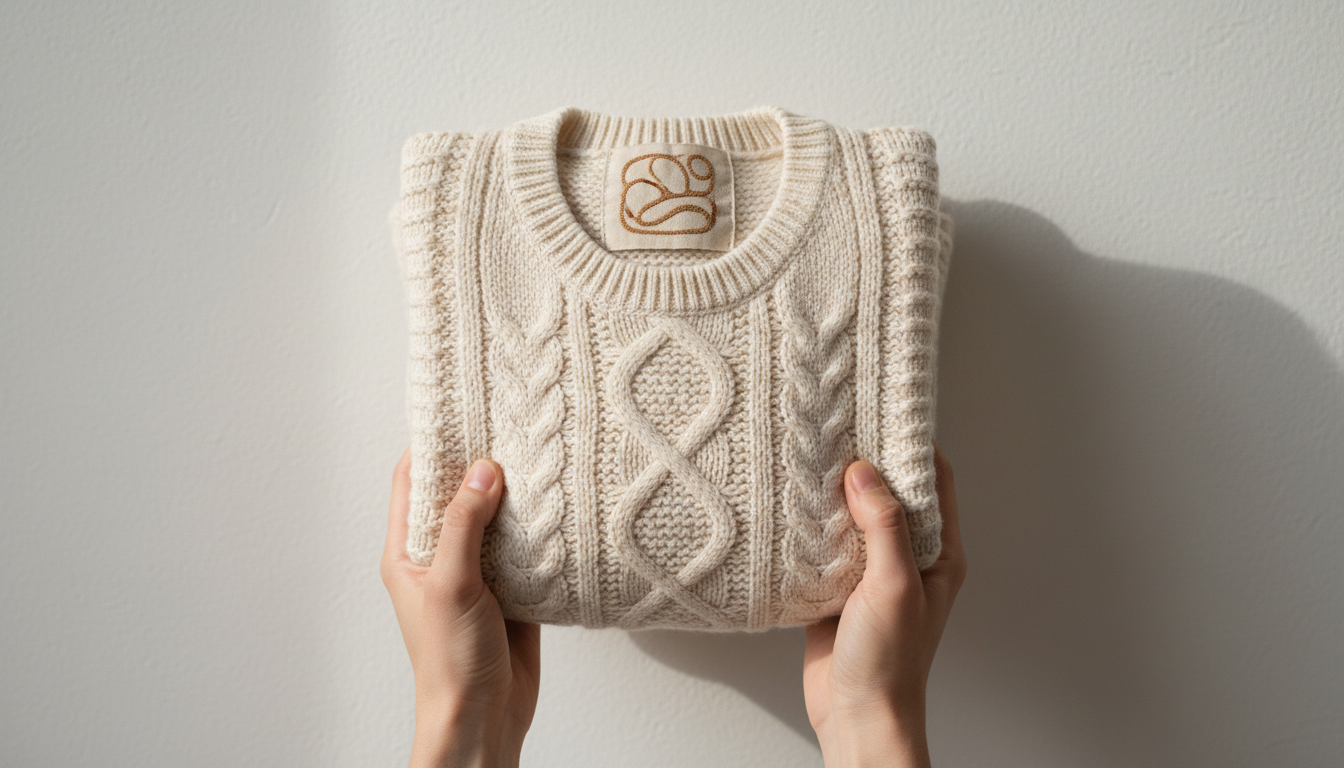
A garment label is a small contract. Before you buy, it is worth ten seconds to read the part most people skip. In the United States, the Textile and Wool Acts require three pieces of information, and the FTC explains how they must appear.
1. Fiber Content, in Percentages
The label lists the fibers by their generic names and percentages by weight, in descending order. Fibers that make up less than 5 percent are generally grouped as “other fiber”, although wool must always be named. If a small fiber has a functional purpose, it may be named too. A garment that says 100 percent cotton is a different purchase from a blend, and the label is where you can tell.
2. Country of Origin, Stated Clearly
The label must name the country where the product was processed or manufactured. A broad region such as the European Union is not enough. The country of origin must be on the front of the label. On garments with a neck, the origin label sits at the inside center of the neck.
3. Who Made It
The label must identify the manufacturer or dealer, either by the company name under which it does business or by its Registered Identification Number (RN). If a brand is unfamiliar, an RN is a way to find out who stands behind the garment.
4. Easy to Read, in English
All the required information must be clearly legible, conspicuous and easy to find. Disclosures must be in English, and they may also appear in other languages as long as English is included. Required words cannot be abbreviated, replaced with ditto marks or hidden in footnotes, apart from certain country-name abbreviations. The three disclosures can appear on one label or on several, and they can share a label with the care instructions.
Sources
- US Federal Trade Commission, “Threading Your Way Through the Labeling Requirements Under the Textile and Wool Acts”, page dated July 2014 with later edits in October 2020 and January 2025. https://www.ftc.gov/business-guidance/resources/threading-your-way-through-labeling-requirements-under-textile-wool-acts