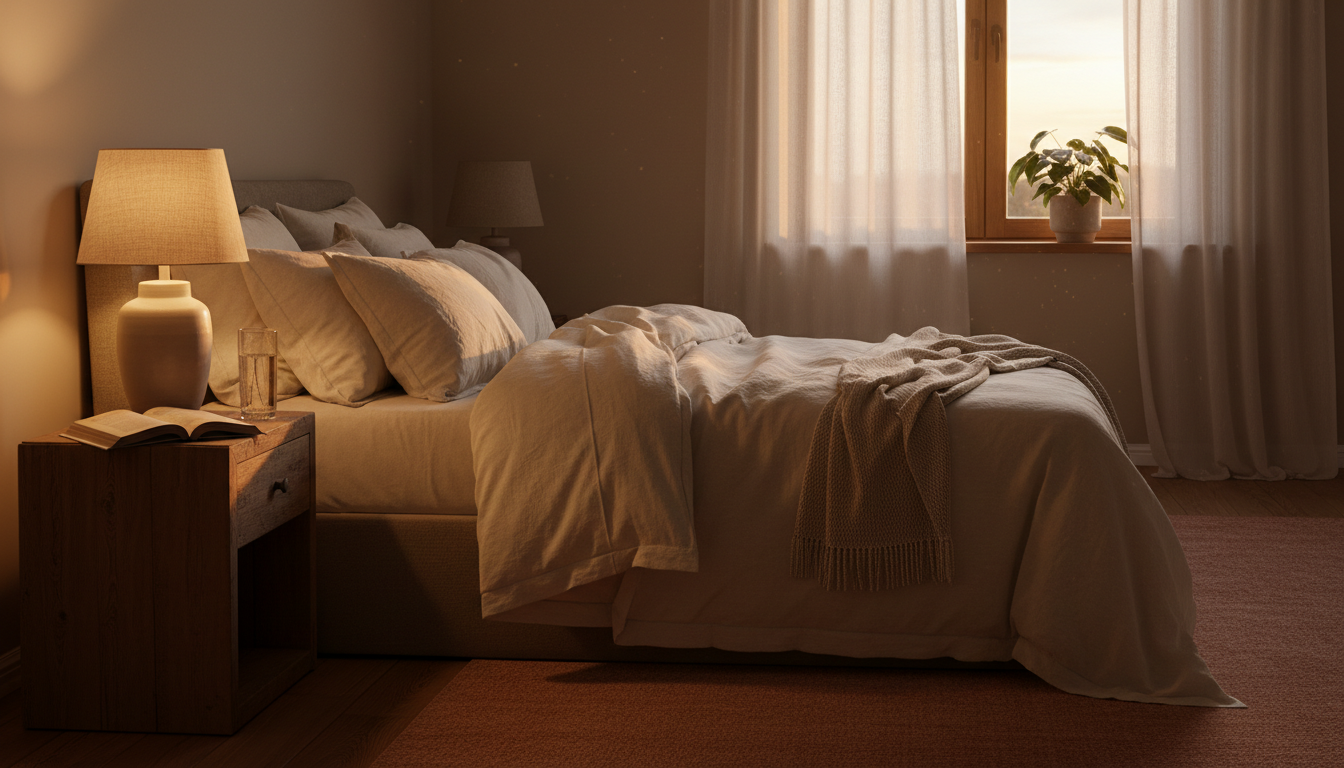
Good sleep rarely comes from one big fix. It comes from small habits that add up. These eight come from public health guidance in the United States and the United Kingdom, and you can start with any of them tonight.
1. Keep the Same Sleep Times
Go to bed and get up at the same times every day. The CDC says so, and the NHS adds that this includes days when you are not working.
2. Aim for Seven Hours or More
The CDC recommends seven or more hours of sleep a day for adults aged 18 to 60. Work backwards from the time you need to get up to find your bedtime.
3. Switch Off Screens Before Bed
The CDC advises turning off electronic devices at least 30 minutes before bed. The NHS goes further and suggests avoiding phones, tablets and computers for an hour, because the blue light from screens can make it harder to fall asleep. Reading, meditation, breathing exercises, calming music or a podcast are the NHS’s suggestions for winding down.
4. Make the Bedroom Quiet, Cool and Dark
The CDC says to keep the room quiet, relaxing and cool. The NHS adds practical fixes: close the curtains fully, keep clocks out of view, put your phone face down or wear an eye mask. For noise it suggests earplugs, a silent phone or steady background sounds such as rainfall or white noise.
5. Watch What You Eat and Drink in the Evening
Both sources say to avoid large meals close to bedtime. The CDC advises avoiding caffeine in the afternoon and evening and alcohol before bed. The NHS suggests avoiding alcohol and nicotine for one to two hours before bed, and offers a warm milky drink or herbal tea as an alternative to caffeine.
6. Move During the Day
The CDC recommends regular exercise. The NHS says even small amounts help and that you can build up gradually. If exercising close to bedtime disrupts your sleep, try being active earlier in the day.
7. Park Your Worries on Paper
If worries keep you awake, the NHS suggests talking to someone you trust or writing them down. If you often worry in bed, make a list of what you need to do tomorrow before you turn the light out.
8. Do Not Force It
If you are still awake after about 20 minutes, the NHS says to get up and do something calm, such as gentle yoga, reading or quiet music, and to go back to bed when you feel sleepy.
If poor sleep carries on despite these changes, talk to a doctor or pharmacist.
This article is provided for general information purposes only. It does not constitute medical advice and does not replace professional advice in an individual case.
Sources
- US Centers for Disease Control and Prevention (CDC), “About Sleep”, page dated 15 May 2024. https://www.cdc.gov/sleep/about/index.html
- UK National Health Service (NHS), “How to fall asleep faster and sleep better”. https://www.nhs.uk/every-mind-matters/mental-wellbeing-tips/how-to-fall-asleep-faster-and-sleep-better/