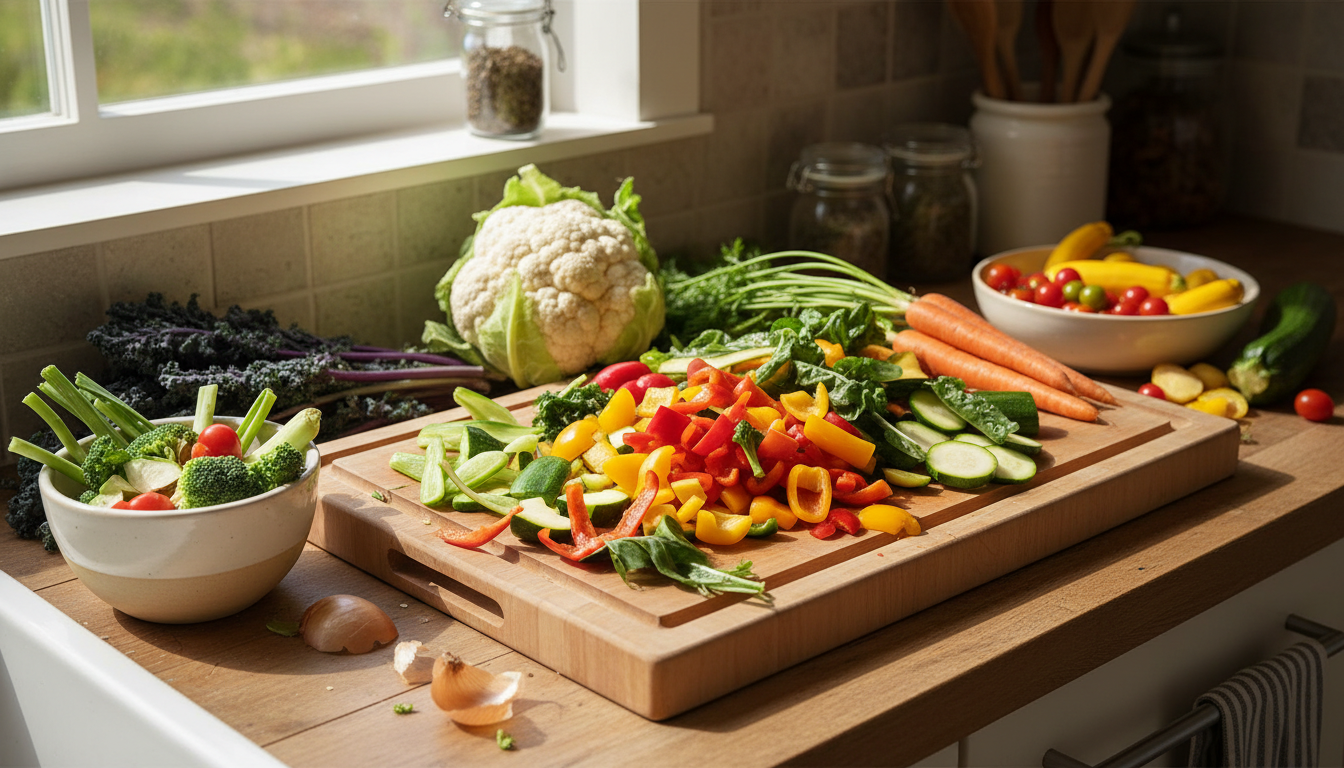
Food you do not eat is money you did not need to spend. The US Environmental Protection Agency has a list of habits that cut waste in the kitchen. These seven are the ones that change the most.
1. Check Before You Shop
Look in your fridge, freezer and pantry before you go to the store, and list what needs to be used up.
2. Plan the Week’s Meals
Plan the week’s meals before shopping and buy only what those meals require. The EPA suggests basing the list on meals you eat at home and noting quantities, such as “salad greens: enough for two lunches”.
3. Store Produce Where It Lasts
Wilt-prone vegetables such as leafy greens, carrots, cucumbers and broccoli go in the fridge’s high-humidity drawer. Most fruits and rot-prone vegetables such as mushrooms and peppers go in the low-humidity drawer. Potatoes, eggplant, winter squash, onions and garlic belong in a cool, dry, dark, well-ventilated place.
4. Keep Ethylene Producers Apart
Bananas, apples, pears, stone fruits and avocados release ethylene, so keep them away from other produce. Wash berries, cherries and grapes only when you are ready to eat them, to prevent mold.
5. Use the Fridge Door Wisely
Do not store milk or eggs in the fridge door, which is the warmest part. Condiments are fine there. Meat, poultry and fish go on the lower shelves, and the refrigerator should be at 40 °F or below.
6. Cook With the Odds and Ends
Past-prime produce and ingredient scraps can go into soups, casseroles, stir-fries, frittatas, sauces, baked goods, pancakes or smoothies. If it is safe, use the parts you would normally throw away: stale bread becomes French toast or croutons, beet greens can be sautéed and vegetable scraps make stock.
7. Freeze, Donate or Compost the Rest
Freeze bread, sliced fruit, meat or leftovers you will not eat in time, and label them. Surplus produce can be frozen, pickled, dried, canned or made into jam. If food truly cannot be eaten, the EPA suggests donating nutritious, safe, untouched food to food banks and composting scraps instead of throwing them away.
Sources
- US Environmental Protection Agency, “Preventing Wasted Food At Home”, last updated 22 June 2026. https://www.epa.gov/recycle/preventing-wasted-food-home